Guatemala
About Guatemala
Land and Climate
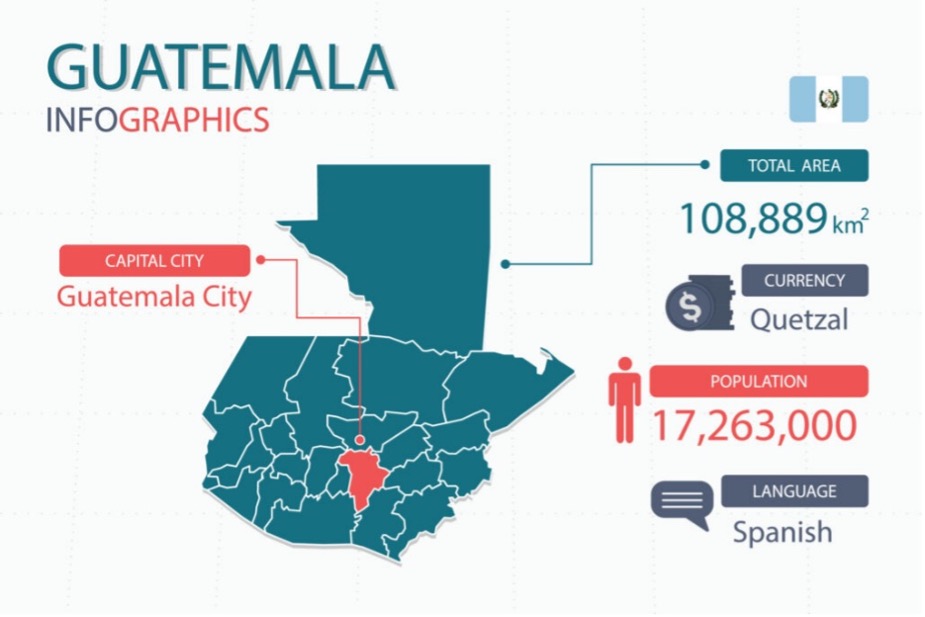
Nestled between Mexico, Belize, Honduras, and El Salvador, Guatemala is the northernmost country of Central America and one of the most multifaceted in the region. Roughly the size of Tennessee, with a landmass of 41,865 square miles, it encompasses 3 main regions: the cool Western Highlands, Tropical Coastline (along both the Pacific and the Caribbean coasts), and Tropical Jungle in the northern lowlands, known as the Petén. Due to the rich geographical diversity, Guatemala is home to over 8,000 different species of plants in 19 eco-systems. However, because of many developing trends such as migration, peasant farming, illegal logging, and slash and burn agriculture practices, much of Guatemala’s lush landscape has been subject to rapid deforestation. November through April marks the dry season while rain is abundant from May through October.
Population and Language
The Guatemalan population of roughly 15 million can be broadly divided into two categories: Ladino (people with Spanish and Mayan descent who relate more closely with their Spanish heritage) and 28 indigenous groups, or Indígenas, which have descended from the Maya. Many of the indigenous groups live in the western highlands and do not speak Spanish as their first language. Indigenous languages such as Quiche, Cakchiquel, Kekchi, Mam, and Xinca are spoken in the home and in the community. Much of the indigenous female population does not speak Spanish because it is afforded fewer opportunities to attend school. Also, located on the Caribbean coast is a small black population known as the Garífuna. The Garífuna speak Creole, Spanish, and English.
Guatemala’s history can be divided into three stages: the Mayan civilization, the arrival of the Spanish during the 16th century, and the modern democratic republic. Guatemala’s historical richness is due primarily to the Mayan civilization, which dates to as early as 2500 B.C.E., reaching its peak between 300 and 900 C.E. Dominating the Mesoamerica region for nearly 2,000 years, the Mayan civilization was based on a series of cultural city centers among which a developed group of artisans, architects, merchants, warriors, priest astronomers, medicine men, mathematicians, and farmers flourished. Although some historians argue that the major Mayan cultural centers lasted until roughly the year 1200 C.E., most agree that the major cities wereabandoned around 900 C.E. The decline of the Mayan civilization was well underway before the Spanish conquistador Pedro de Alvarado conquered Guatemala, in 1523-1524 C.E.
During the Spanish colonial period, Spain introduced a land distribution system in which colonists received large tracts of land, which were worked on by indigenous people, who became indentured serfs. This created a deeply entrenched system of racial hierarchy in which the colonists of European descent were on top, Ladinos (those of mixed blood) in the middle, and the indigenous populations at the bottom. This colonial system existed until the quest for independence started in the early 19th century. Guatemala achieved independence from Spain on September 15, 1821.
The conservative, large landholders and the Church heavily influenced Guatemalan politics through the first half of the 19 th century. However, Guatemala’s 1871 “Liberal Revolution,” led by Justo Rufino Barrios, looked to modernize the country though improved trade, new crops, education, and manufacturing.Beginning in the early20th century, Guatemala passed through a series of dictatorships. During the regime of Manuel Estrada Cabrera (1898-1930), the dictator gave the U.S. owned United Fruit Company (UFC) a controlling percentage of Guatemala’s fertile land as well as control of Guatemala’s only viable port, Puerto Barrios. Combined with the rights to other markets such as transportation, electricity, and communication, the UFC dominated Guatemala’s economy. The trend of ceding national property rights to foreign interests continued under General Jorge Ubico’s (1930-1944) regime. Disillusioned with its government, the “October Revolutionaries,” a group of students and liberal professionals, overthrew Ubico in 1944 and elected Juan José Arevalo as Guatemala’s first democratically elected president.
Known as the “Ten Years of Spring,” this era was a period of reform and progress for Guatemala. However, the “Ten Years of Spring” was overshadowed by the 36-year civil war that erupted in the early 1960s as a reaction to democratically elected Colonel Jacobo Arbenz Guzmán’s Agrarian Land Reform, which looked to redistribute land ownership in Guatemala. The civil war officially ended in 1996 with the signing of the Peace Accords that sought to bring about reconciliation between the warring groups and hold true to the principles of democracy, human rights, and an end to poverty.
The Need In Guatemala
Guatemala’s healthcare system faces challenges typical of developing nations: infrastructure gaps, urban-rural disparities, workforce shortages, and funding constraints. However, these challenges present numerous opportunities for improvement and investment.
One of the many investigations and studies to define Guatemala’s need is shared here. According to OCHA, the main humanitarian concerns in Guatemala include food insecurity, acute malnutrition in children under 5 years of age, and the increased need for protection and basic needs due to the increase in migrant and refugee flows.
Guatemala ranks first in Latin America and sixth worldwide in cases of chronic malnutrition in children under 5 years of age. Nearly half of children (46.5%) suffer from chronic malnutrition. Approximately 5.3 million people need humanitarian assistance, including food, emergency medical services and treatment, access to safe water and sanitation, shelter and protection assistance, including information and referral mechanisms for cases of gender-based violence and other types of violence.
Given its proximity to Mexico and the United States, Guatemala is a country of origin, transit, destination, and return for people on the move, including refugees and asylum seekers.
Where We Serve in Guatemala
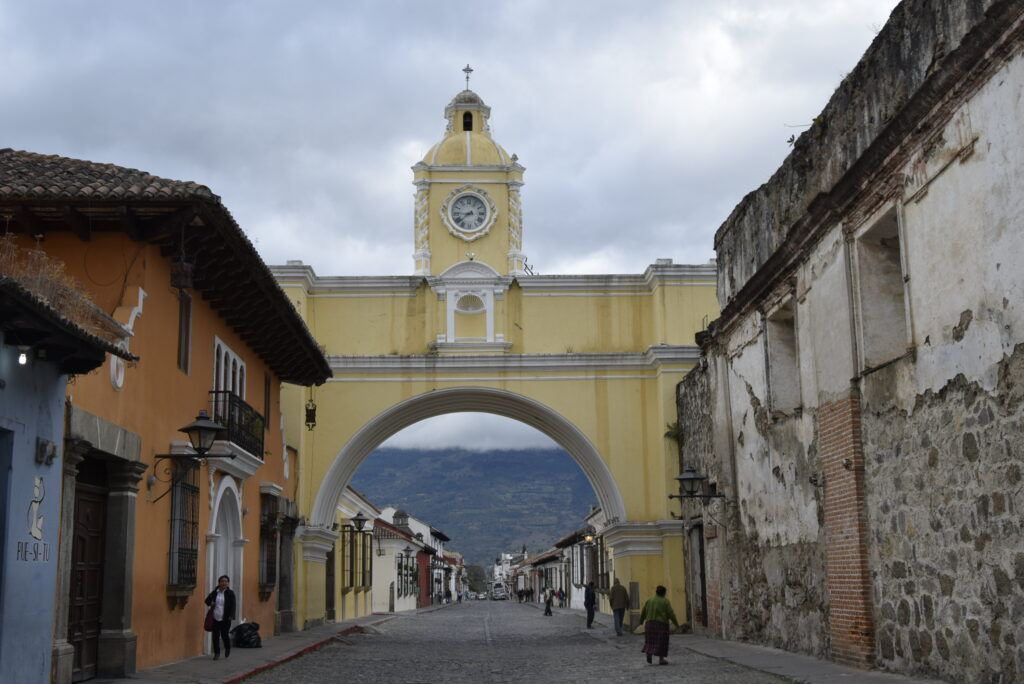
Guatemala is a blessed land with so many different climates and landscapes, going from mountain range, rain forest, jungle, desertic areas and plains. Being the central region with the most stable weather conditions, the most populated and it is estimated that around 5 to 6 million inhabitants live in the central area and the rest live in the other areas. Most of the projects we work on are in the central and central north regions of the country.
Rural
In the central north part of the country, we are going to find a high density of Mayan Indigenous population. This is where most of the rural communities will be, but this is very normal in Guatemala once you leave the central area. We can say with certain that even inside the central areas or big cities you will have a lot of rural areas because of the living conditions.
Semi-Rural
Like many other countries in Central America, Guatemala Semi-Rural areas are right next to big cities, because of its proximity to the Cities, there are more option for the population to work, but at the same time because of a lot of different factors like low income, population still live in rural or semi-rural communities.
Cultural Exploration
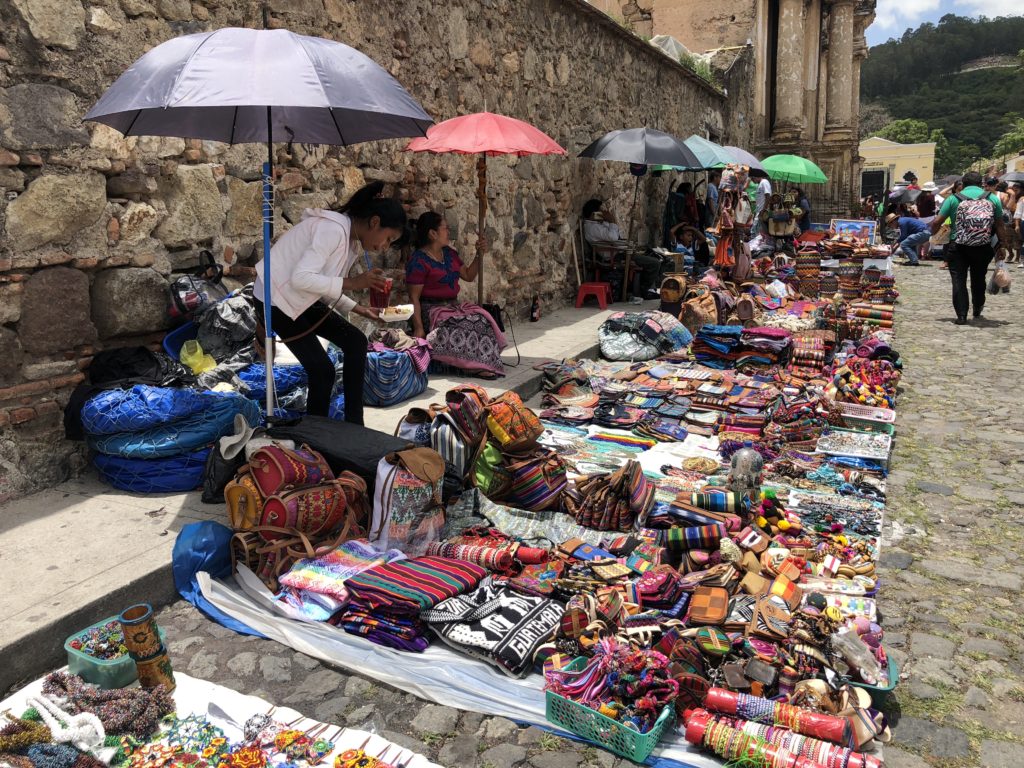
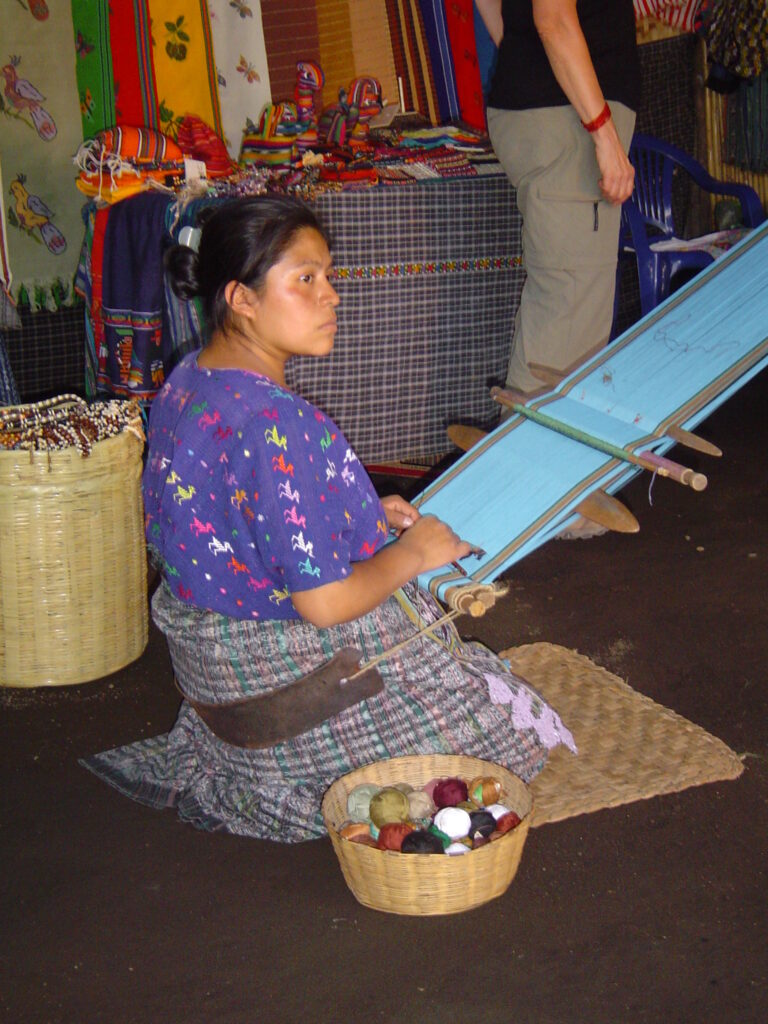
With ISL Guatemala, you’ll have many opportunities to explore the culture of those you serve such as by taking cooking classes where you learn how to make one of the many famous and delicious Guatemalan dishes and drinks. Learn the basics on Salsa, Merengue or Bachata in dance classes, or if you are already advanced, take personal lessons to improve your dance skills. There are possibilities for many tours to see numerous archaeological sites, one of the many active volcanoes, attend a chocolate making class, visit a coffee plantation, try a zipline, and if time permits you may be able to do a day trip to the amazing Mayan ruins from Tikal, where part of the episode IV: A New Hope from Star Wars was filmed. the local Farmers’ Market in Antigua Guatemala is open every day, with Mondays, Thursdays and Saturdays considered the best market days, as the farmers from neighboring communities offer their best deals on their freshest products. Handicrafts are taught by members of a local women’s group, and you can learn how to make native crafts and have something special to take home when you’re done volunteering.
Recreation
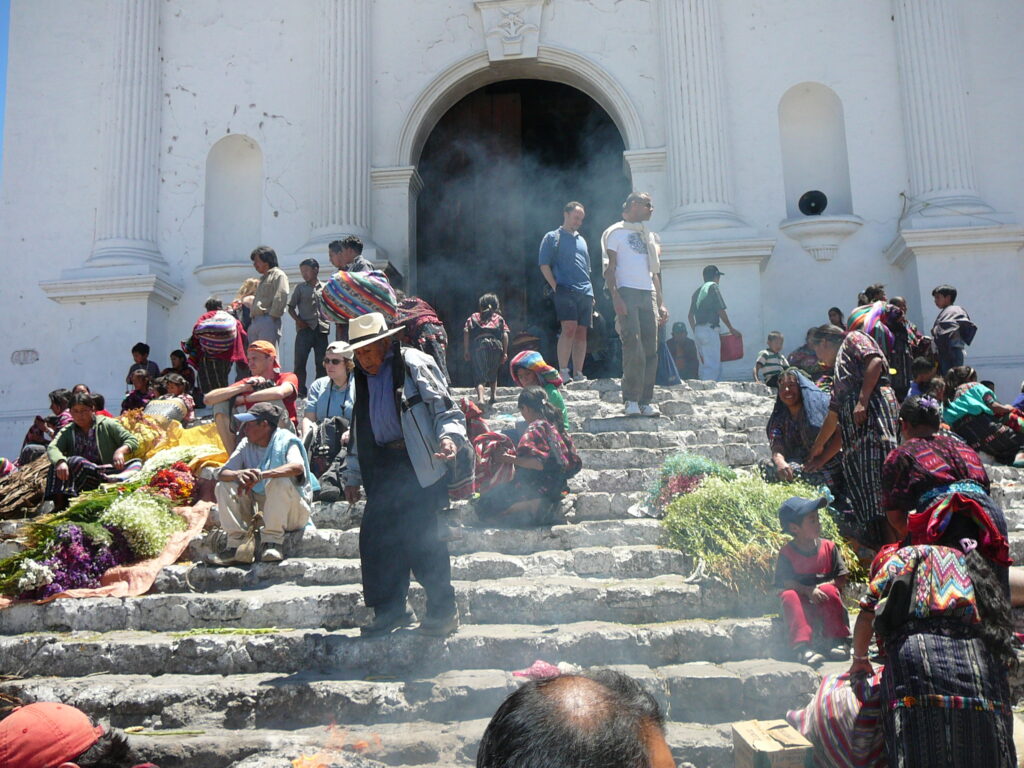
When it comes time to get out and explore, you’ll see why Guatemala is said to be one of the most breathtaking places on earth. Dependent on the location of the clinic you may have opportunities to explore jungles, rainforest, active volcanoes, Mayan ruins, majestic lakes and many more activities are all potential opportunities. In Antigua, Guatemala a walking tour is a must in order to learn more about the history of the city, while Lake Atitlan, framed by volcanoes, makes great memories.
Recreational opportunities may have an extra cost so check with your ISL Representative when scheduling your activities to make sure that you prepare well for those expenses.
Country Coordinator
International Service Learning (ISL) is very proud of their Country Coordinators and we would like for you to get to know them, before you visit their beautiful country. All of our Country Coordinators are hardworking, passionate individuals who enjoy serving their communities and working with ISL volunteers, and they all have their own very unique stories.
Maria Jose Tubac has been working with ISL for the past year to redevelop the ISL experience in Guatemala. Maria is from Guatemala City, located in the central part of the country. It is the fourth capital of Guatemala, after it was moved from Iximché, Ciudad Vieja, and Antigua. Maria has always lived in Guatemala City, however with her family she has traveled and visited many places across the country. Maria lives with her parents, an older brother, three dogs, and about fifteen fish. She enjoys hiking with her dogs, watching movies together with her family, and playing video games with her brother.
Maria studied tourism, but then fell in love with languages after spending a year learning Chinese. That experience inspired her to pursue a degree in Linguistic Sciences, specializing in translation and interpretation. After completion of her degree she continues to learn languages, and is currently studying German.
One of her first jobs was at a delivery and insurance company. Later, she moved into the field of interpretation, and has been working as a medical interpreter for almost four years. She has also had the opportunity to serve as a team leader and assistant team leader with volunteers.
As the ISL Country Coordinator she will be coordinating logistics for the teams visiting her beautiful country. Her role will be to ensure that the in-country team is fully prepared to provide the best experience, that the community is ready to receive services, and that all group needs (such as transportation, food, and lodging) are organized and ready.
Maria is most inspired by the gratitude of the people and by knowing that she can create change in their lives. Using what she knows (languages) she can make a difference with small steps, and when she sees the impact on people’s lives, she realize that everything is worth it.
She is also inspired by the people of Guatemala: their gratitude and their hearts. Even when they receive something small, they are genuinely happy and thankful. Those moments remind her that every effort is meaningful and worthwhile.
Guatemala's Staff
We love our staff and we are positive that you will too! Each staff member is professional, courteous, and has the same passion as you do: to serve others.
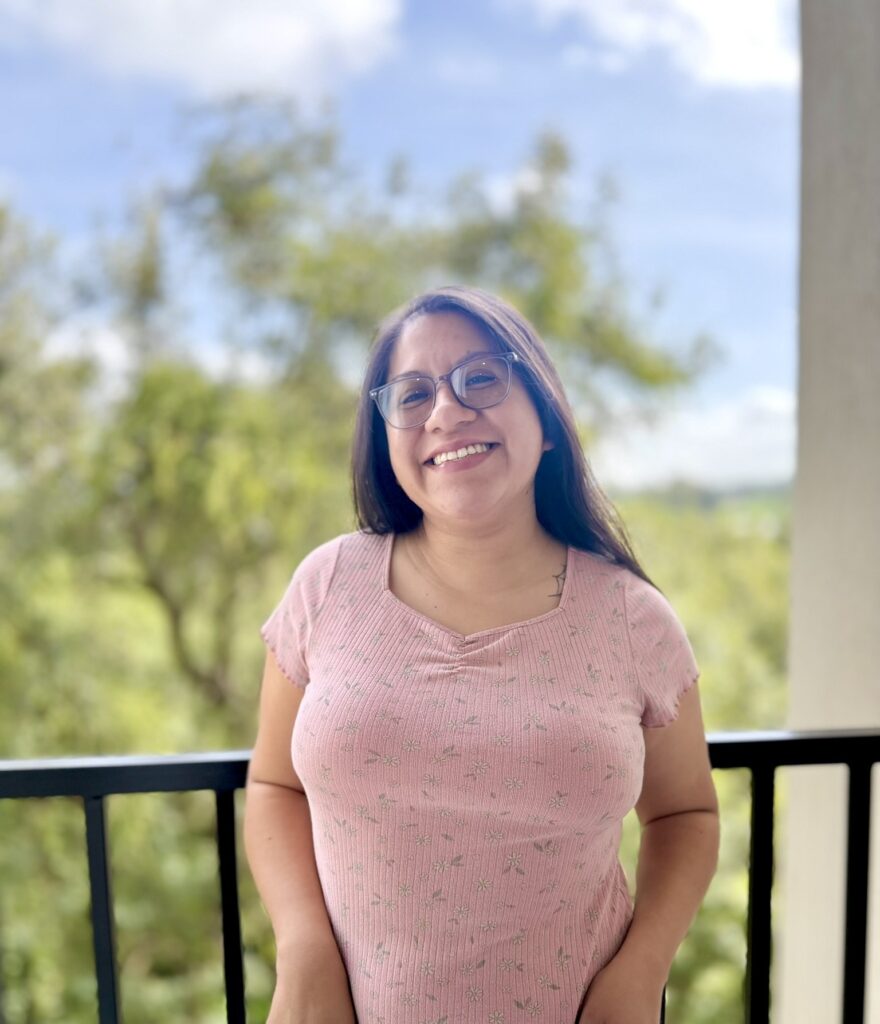
Maria Jose Tubac
Country Coordinator
Upcoming Programs
-
Gua122626GH: $2495
The goal of ISL's global health program is to learn about local health care challenges, experience Guatemalan culture, and gain perspective on the global landscape. Programming will take place in an ISL partner institution. Programming will take place in an ISL partner community. Volunteers will participate in public health surveying and clinical activities, including interviewing patients, taking vitals, and helping out in the pharmacy.Dec
26
2026
toJan
03
2027
-
Gua030627GH: $2395
The goal of ISL's global health program is to learn about local health care challenges, experience Guatemalan culture, and gain perspective on the global landscape. Volunteers will participate in public health surveying and clinical activities, including interviewing patients, taking vitals, and helping out in the pharmacy.Mar
06
2027
toMar
14
2027
-
Gua031327GH: $2395
The goal of ISL's global health program is to learn about local health care challenges, explore Guatemalan history and culture, and gain perspective on the global landscape. Programming will take place in an ISL partner institution. Volunteers will assist health care providers with patient care. Participants: Programming will take place in an ISL partner community. Volunteers will participate in public health surveying and clinical activities, including interviewing patients, taking vitals, and helping out in the pharmacy.Mar
13
2027
toMar
21
2027
-
Gua032027GH: $2395
The goal of ISL's global health program is to learn about local health care challenges, explore Guatemalan history and culture, and gain perspective on the global landscape. Programming will take place in an ISL partner institution. Volunteers will assist health care providers with patient care. Participants: Programming will take place in an ISL partner community. Volunteers will participate in public health surveying and clinical activities, including interviewing patients, taking vitals, and helping out in the pharmacy.Mar
20
2027
toMar
28
2027